
WELCOME BONUS 300%
UP TO €2000 + 100
FREE SPINS
UP TO €2000 + 100
FREE SPINS
Home → Roulette
Roulette at Spinbit Casino
How Much Balance Covers 50 Rounds?
The French Roulette variant with La Partage offers a theoretical return to player of 98.65% on even money bets, which establishes the baseline for bankroll management strategies in this specific game mode. This high RTP figure means that for every 100 euros wagered on red or black, the casino retains only 1.35 euros as the house edge over the long term. Consequently, a starting balance of 50 euros allows for approximately 50 rounds at the minimum stake of 0.10 euros per spin without immediate depletion due to variance. Players should note that this favorable rate applies strictly to outside bets and not to internal wagers where the edge increases significantly.
In contrast, the European Roulette wheel operates with a standard house edge of 2.70%, requiring a larger buffer to sustain the same number of spins compared to the French version. The American Roulette variant presents a much steeper challenge with a house edge of 5.26% due to the additional double zero sector, which drastically reduces the expected longevity of any given bankroll. A 50 euro balance would last roughly half as long in American Roulette as it does in French Roulette when betting the same amount per round. This disparity highlights the importance of selecting the correct table variant to maximize playtime and minimize the impact of the house advantage on your funds.
The Quantum Roulette Live table by Playtech introduces multipliers up to 500x, which can dramatically alter the volatility and potential duration of a session involving small stakes. While the base RTP remains at 97.30%, the introduction of random multipliers means that a single spin can result in a payout far exceeding the standard 35:1 for a straight bet. Therefore, maintaining a 50 euro balance requires careful monitoring of bet sizes, as winning streaks with multipliers can quickly deplete funds if bets are increased aggressively. The maximum bet limit of 5,000 euros provides flexibility, but most players will find that sticking to lower stakes helps manage the unpredictability introduced by the quantum features.
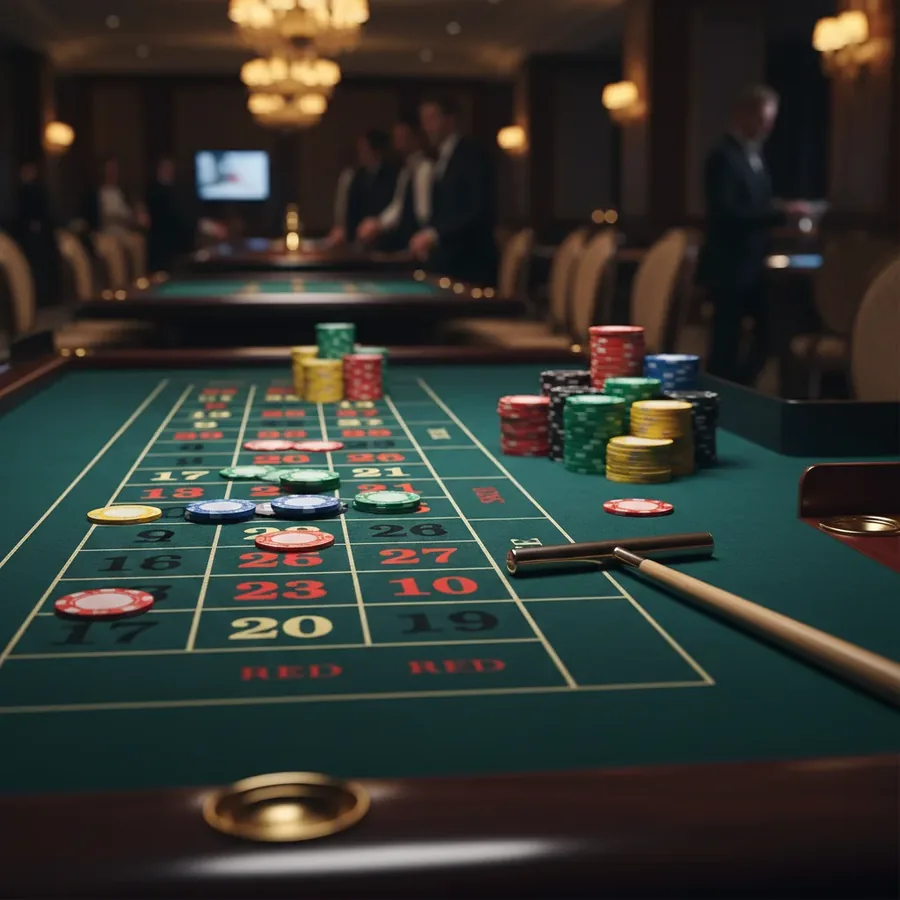
Straight 35:1 as Highest Single Payout
The Straight bet on any roulette table pays out at odds of 35:1, representing the highest possible single payout for a standard wager on a specific number within the game structure. This payout ratio is consistent across both the European and American variants, although the probability of winning differs due to the varying number of sectors on each wheel type. For instance, hitting a single number on the European wheel with 37 sectors yields this 35:1 return, whereas the American wheel with 38 sectors maintains the same payout but lowers the win probability. Understanding this fixed payout is crucial for calculating potential returns when placing high-risk bets on individual numbers during gameplay sessions.
In comparison, the Split bet covers two adjacent numbers and pays out at 17:1, which is exactly half the return of a Straight bet but doubles the chances of success statistically. The Street bet, covering three numbers in a row, offers an 11:1 payout, providing a middle ground between the high risk of single numbers and the lower returns of outside bets. These progressive payout structures ensure that while the Straight bet offers the maximum reward, it also carries the highest risk of loss with only one winning sector out of thirty-seven or thirty-eight. Players often use these varying odds to balance their portfolio of bets, mixing high-payout internal wagers with safer external options to manage volatility effectively.
The Blaze Roulette table by Authentic Gaming adheres to these standard payout ratios, offering a Straight bet payout of 35:1 on its European wheel with 37 sectors. However, the live dealer format introduces real-time interaction and specific host schedules from 19:00 to 01:00 CEST, which may influence the pace and frequency of bets placed by participants. The maximum payout for any single round is capped at 35:1 for standard bets, ensuring that even with large stakes, the return does not exceed the established table limits. This consistency in payouts across different providers allows players to transfer their knowledge of odds and potential returns seamlessly between software-based and live dealer roulette games.
How Much to Bet for 10 Percent Contribution?
Tischspiele contribute exactly 10 percent towards the bonus turnover requirement, meaning that for every 100 euros wagered on roulette tables, only 10 euros count toward clearing the bonus conditions. To fully utilize the 300% welcome bonus up to 2,000 euros, players must generate significant turnover, making the low contribution rate a critical factor in planning their betting strategy. If a player bets 1,000 euros on European Roulette, only 100 euros of that amount is credited against the wagering requirement, necessitating a total bet volume of 40,000 euros to clear a 1,000 euro bonus. This slow accumulation of progress highlights the need for substantial bankroll management when attempting to convert bonus funds into withdrawable cash through table games.
The distinction between the contribution rate and the actual house edge is vital, as the 10% contribution applies regardless of whether the player wins or loses individual spins on the roulette table. Even with a favorable RTP of 98.65% on French Roulette, the bonus progress moves at a tenth of the betting speed, effectively increasing the real cost of meeting the wagering requirements. Players betting on American Roulette face a double penalty, combining the higher 5.26% house edge with the reduced 10% bonus contribution, which accelerates the erosion of their bonus balance. Strategic bet sizing becomes essential, as smaller, more frequent bets allow for longer engagement with the bonus funds while minimizing the rapid depletion caused by the combined effects of edge and contribution rules.
For those utilizing the Quantum Roulette Live option, the 10% contribution rule still applies to all bets placed, including those that trigger the special quantum multipliers. Although multipliers can lead to large wins, these winnings are subject to the same bonus terms and do not bypass the 10% contribution limitation for the underlying stake. Consequently, a player might experience high volatility with significant payouts but still find themselves far from meeting the turnover target if their total wagered amount is insufficient. It is advisable to track the total sum wagered rather than just the net profit, as the bonus clearance depends entirely on the gross betting volume accumulated across all eligible roulette rounds.
Max Bet Per Number vs. Max Bet Per Round
The maximum bet allowed per number in Quantum Roulette Live is constrained by the overall table limit of 5,000 euros, which caps the stake on any single straight wager. This limit ensures that even with the potential for 500x multipliers, the maximum payout from a single number bet remains within the operational boundaries set by the provider Playtech. In contrast, standard European Roulette at Blaze Roulette also permits bets up to 5,000 euros per round, allowing players to place high stakes on internal combinations like splits or streets. Understanding these per-round limits is crucial for high rollers who wish to maximize their exposure to specific numbers without violating the table's maximum stake regulations during live sessions.
When comparing the Five Number Bet in American Roulette, which covers five sectors including 0 and 00, the max bet per round still adheres to the general table limit of 5,000 euros. This bet offers a unique risk profile with a house edge of 7.89%, the highest among standard roulette wagers, yet it remains subject to the same maximum stake constraints as other bets. The payout for this specific wager is 6:1, which is lower than the Straight bet but compensates with a higher probability of winning by covering nearly 13% of the wheel. Players should note that while the max bet per number is effectively the table limit, the distribution of stakes across multiple numbers in a single round must collectively respect this ceiling.
The difference between betting per number and betting per round becomes apparent when placing complex inside bets, such as corners or six-lines, which cover multiple numbers simultaneously. A corner bet covering four numbers at the maximum stake of 5,000 euros would require splitting the stake across the four cells, potentially reducing the effective bet per individual number. This structural nuance affects how players approach high-stakes gaming, as spreading bets can mitigate the impact of the house edge while still utilizing the full betting capacity of the table. For instance, in French Roulette, placing maximum stakes on various combinations allows for diversified exposure, but the total round limit restricts the ability to stack unlimited value on single outcomes.
Which Bets are Excluded from Bonus Wager?
The La Partage rule in French Roulette applies exclusively to even money bets such as Red/Black, Odd/Even, and Low/High, which are fully eligible for bonus wagering contribution. Internal bets like Straight, Split, Street, and Corner wagers do not benefit from the La Partage refund mechanism, but they still count toward the 10% bonus turnover requirement at the same rate. This distinction is important because while the external bets offer a lower house edge of 1.35%, the internal bets carry a higher edge of 2.70% and lack the safety net of partial refunds. Players must therefore decide whether to prioritize the statistical advantage of external bets or the higher payout potential of internal wagers when fulfilling their bonus conditions.
Bets placed on the American Roulette wheel, particularly the Five Number Bet, are included in the bonus wagering calculation despite their unfavorable 7.89% house edge. There are no explicit exclusions listed for specific bet types within the standard roulette offerings, meaning that all valid wagers on the European, American, and Live tables contribute to the turnover. However, the effectiveness of these bets varies significantly; for example, the American Double Zero bet increases the house advantage, thereby accelerating the loss of bonus funds relative to the progress made. Consequently, while technically allowed, certain bets are strategically discouraged due to their negative impact on the bankroll's sustainability during the wagering period.
The Blaze Roulette table by Authentic Gaming includes all standard European roulette bets in the bonus contribution scheme, with no specific exclusions for live dealer interactions or host-led rounds. The minimum bet of 0.20 euros and maximum of 5,000 euros apply uniformly across all bet types, ensuring that both conservative and aggressive betting strategies remain compliant with the bonus terms. Since the game operates on a 37-sector wheel with a 2.70% house edge, players can expect consistent treatment of all wagers regarding their contribution percentage. It is essential to verify that no side bets or special features have separate exclusion clauses, but for standard play, all roulette bets on this table facilitate the clearing of the welcome bonus requirements.
Roulette bet types at a glance
| Bet | Payout | Win Chance | Numbers Covered | House Edge |
|---|---|---|---|---|
| Roulette Amerikanisch – Five Number Bet (0, 00, 1, 2, 3) | Five Number 6:1 (deckt 5 von 38 Sektoren) | 92.11% | Einzige Wette am amerikanischen Rad mit Edge über 5,26% – „Fallenwette“. Kein Äquivalent am europäischen Rad | 7.89% |
| Roulette Französisch mit La Partage (gerade Chancen) | Rot/Schwarz 1:1 (bei 0 Rückerstattung 50%), Odd/Even 1:1, Low/High 1:1; Innere Einsätze ohne La Partage: Straight 35:1, Split 17:1, Street 11:1, Corner 8:1 | 98.65% | Bei 0 wird die Hälfte des Einsatzes auf gerade Chancen zurückerstattet (Rot/Schwarz, Pair/Impair, Manque/Passe). En Prison gibt denselben 1,35%. Regel gilt NUR für gleiche Einsätze | 1.35% |
| Roulette Europäisch (einfache Null, 37 Sektoren) | Straight 35:1, Split 17:1, Street 11:1, Corner 8:1, Six Line 5:1, Dozen 2:1, Column 2:1, Rot/Schwarz 1:1, Odd/Even 1:1, 1-18/19-36 1:1 | 97.30% | 37 Sektoren (1–36 + 0); Auszahlungen wie für 36 Sektoren – daher konstanter Edge auf ALLE Wetten | 2.70% |
| Roulette Amerikanisch (doppelte Null, 38 Sektoren) | Straight 35:1, Split 17:1, Street 11:1, Corner 8:1, Six Line 5:1, Dozen 2:1, Column 2:1, Rot/Schwarz 1:1 | 94.74% | 38 Sektoren (1–36 + 0 + 00); Auszahlungen wie beim europäischen Rad, aber der zusätzliche Sektor verdoppelt den Hausvorteil | 5.26% |
| Roulette Französisch, innere Einsätze (La Partage gilt nicht) | Straight 35:1, Split 17:1, Street 11:1, Corner 8:1, Six Line 5:1, Dozen 2:1, Column 2:1 | 97.30% | Rad gleich (37 Sektoren), aber La Partage/En Prison gilt nicht für innere Einsätze – Edge bleibt europäisch | 2.70% |
When is it Worth Switching to French Roulette?
La Partage on European Roulette reduces the house edge for even-money bets from 2.70% to 1.35%, significantly improving long-term retention rates compared to standard tables. This rule refunds half the stake when the ball lands on zero, effectively halving the casino's advantage on wagers like Red/Black or Odd/Even during losing spins. The improved RTP of 98.65% makes this variant mathematically superior for players seeking to minimize losses over extended sessions without altering their betting strategy.
Switching to a table with En Prison offers an alternative mechanism where the original bet remains locked for the next spin if zero appears, rather than being immediately forfeited. This specific rule also lowers the house edge to 1.35% for outside bets, providing a similar mathematical benefit to La Partage while maintaining the traditional flow of the game. Players utilizing these rules enjoy a more favorable expected value, as the statistical disadvantage is substantially reduced compared to variants lacking such protective measures.
Standard American Roulette lacks these player-friendly rules entirely, resulting in a much higher house edge of 5.26% due to the presence of the double zero pocket on the wheel. The absence of La Partage or En Prison means that any zero outcome results in a total loss of the wager, accelerating bankroll depletion at a faster rate than French tables. Consequently, switching to French variants is strictly advisable for those prioritizing mathematical efficiency and longer playing time with the same initial deposit amount.
European or American: Which Wheel Pays Better
The American Roulette wheel features 38 sectors including both single and double zeros, which directly increases the house edge to 5.26% compared to the European single-zero version. This additional green pocket alters the probability distribution for every bet type, ensuring that the casino retains a larger percentage of all wagers placed over the long term. Players betting on straight numbers still receive 35:1 payouts, but the likelihood of winning is mathematically lower due to the expanded number of possible outcomes on the wheel layout.
European Roulette utilizes a 37-sector wheel containing only one zero, which maintains a consistent house edge of 2.70% across all bet types regardless of their placement on the table. This structural difference provides a better theoretical return to player ratio, making it statistically more advantageous for individuals aiming to preserve their capital during extended gaming sessions. The payout structure remains identical to American versions, yet the reduced number of pockets ensures a higher frequency of winning combinations for identical wager sizes.
Quantum Roulette Live by Playtech introduces multipliers up to 500x on specific numbers while retaining the standard 37-sector European wheel layout with a 97.30% RTP for base gameplay. These special features can temporarily boost returns on straight bets, but the underlying house edge remains governed by the European wheel mechanics rather than the American double-zero format. The maximum bet limit of 5,000 EUR allows high rollers to capitalize on these multipliers, though the base probability of hitting a winning number remains tied to the single-zero design.
Minimum and Maximum Bets Limit Every Martingale
Blaze Roulette hosted by Authentic Gaming imposes a minimum bet of 0.20 EUR and a maximum cap of 5,000 EUR, creating strict boundaries for progressive betting strategies like the Martingale system. The upper limit restricts the ability to double stakes after consecutive losses, potentially preventing players from recovering earlier deficits if they encounter a long losing streak before reaching the table ceiling. This constraint forces strategic adjustments, as the standard doubling progression becomes unsustainable once the maximum wager threshold is approached during adverse run sequences.
The Quantum Roulette variant shares identical betting limits ranging from 0.10 EUR to 5,000 EUR, offering a slightly lower entry point for casual players while maintaining the same high-stakes ceiling for serious gamblers. These fixed boundaries ensure that no single session can exceed the platform's risk management parameters, effectively capping potential losses regardless of how aggressively a player escalates their wager size over time. The consistent limits across different providers simplify bankroll planning and reduce the complexity of managing variable table restrictions during live gameplay sessions.
Table games contribute only 10% toward bonus wagering requirements, meaning that placing bets on these roulette variants progresses the playthrough condition at a significantly slower rate than slot machines. A 100 EUR wager on Blaze Roulette counts merely as 10 EUR toward the required turnover, necessitating substantially higher total volume to unlock withdrawable funds from the welcome offer. This low contribution percentage discourages heavy reliance on table games for clearing bonuses, as the effective cost of meeting requirements becomes disproportionately high relative to the actual cash wagered.
Payout Table from 35:1 to 1:1
Straight bets covering a single number yield a payout ratio of 35:1 across all roulette variants, rewarding correct predictions with thirty-five times the original stake plus the returned wager. This highest nominal payout corresponds to the lowest probability of success, as players must accurately guess one specific sector out of thirty-seven or thirty-eight depending on the wheel type used. The consistency of this payout structure ensures that risk-reward calculations remain uniform regardless of whether the player chooses European, American, or specialized live dealer versions of the game.
Split bets targeting two adjacent numbers provide a 17:1 return, offering a balanced compromise between frequency of hits and magnitude of reward for intermediate-risk strategies. Street bets spanning three horizontal numbers pay 11:1, while Corner bets covering four intersecting squares return 8:1, each step down reducing the multiplier to reflect increased winning probabilities. Dozen and Column bets paying 2:1 cover broader sections of the board, providing nearly one-third coverage with modest returns suitable for conservative bankroll management approaches.
External wagers such as Red/Black, Odd/Even, and High/Low deliver even money at a 1:1 ratio, representing the safest options with approximately 48.6% to 49.3% win probabilities depending on the wheel configuration. These bets form the foundation of many progression systems due to their high hit frequency and minimal variance, allowing players to sustain activity over longer periods with smaller fluctuations in balance. The uniformity of these payouts simplifies mental accounting during rapid gameplay, enabling quicker decision-making without complex calculation of potential returns for each individual spin outcome.
Straight 35:1 vs Dozen 2:1 Hit Rate
A Straight bet covering a single number on a European wheel wins approximately 2.70% of spins, generating a theoretical return of 97.30% despite the high 35:1 payout multiplier. This low hit rate requires substantial bankroll reserves to withstand frequent dry spells, as consecutive losses are statistically inevitable given the near-50-to-1 odds against immediate success on any given rotation. Players pursuing this strategy accept high volatility in exchange for the possibility of significant single-spin gains that can offset previous defeats within a limited timeframe window.
Dozen bets covering twelve numbers simultaneously achieve a hit rate of roughly 32.43% on European wheels, providing a much higher frequency of small wins compared to single-number speculation. The 2:1 payout structure ensures that successful attempts recover multiple previous losses, smoothing out the equity curve and reducing overall variance for disciplined stakeholders employing systematic staking plans. This approach favors consistency over explosive growth, appealing to those prioritizing extended session longevity rather than chasing rare large jackpots through high-risk speculative positioning tactics.
Error: Planning for 500x Multiplier as Standard
Quantum Roulette Live from Playtech offers multipliers up to 500x on single numbers, which drastically alters the risk profile compared to standard European roulette that maintains a constant 2.70% house edge across all thirty-seven sectors. This specific feature applies only to the Quantum variant and does not affect Blaze Roulette by Authentic Gaming, which sticks to traditional payout structures without such random boosts. Players must recognize that this high-variance mechanic is an exception rather than the norm in live dealer tables.
The maximum multiplier of 500x appears randomly on one to five numbers per spin, creating a potential payout of 1,750 units for a straight bet instead of the usual 35 units. In contrast, standard Straight bets in European or French roulette pay 35:1 regardless of any external modifiers, ensuring predictable returns based solely on the wheel layout. The presence of these multipliers increases volatility significantly, requiring players to adjust their bankroll management strategies accordingly for each session.
Bet limits at Quantum Roulette Live range from 0.10 EUR to 5,000 EUR, allowing high rollers to capitalize on the 500x multiplier while keeping minimum stakes accessible. Blaze Roulette shares the same 5,000 EUR maximum limit but excludes quantum features, offering a stable 97.30% RTP without the chance of massive single-spin payouts. Understanding these distinctions helps players choose between high-risk excitement and consistent long-term play when selecting a live table.
Place Chip Until Rien ne va plus
European roulette wheels contain thirty-seven numbered sectors, including a single zero, which establishes a fixed house edge of 2.70% for all bet types placed on the table. This mathematical certainty remains unchanged regardless of the betting strategy employed, as the payout ratios like 35:1 for straights are derived directly from the thirty-six non-zero outcomes. Players should understand that the house advantage is built into every chip placement before the dealer announces that no further bets will be accepted.
French roulette introduces the La Partage rule for even-money bets, reducing the house edge to 1.35% by returning half the stake when the ball lands on zero. This rule applies exclusively to Red/Black, Odd/Even, and High/Low wagers, leaving inside bets like Straights and Corners unaffected by the reduced edge. The distinction between European and French rules significantly impacts long-term retention, with the latter offering better odds for conservative betting patterns.
American roulette expands the wheel to thirty-eight sectors by adding a double zero, which doubles the house edge to 5.26% for standard bets compared to the European version. This additional sector creates a significant disadvantage for players, making American roulette one of the least favorable table games in terms of expected return. The Five Number Bet on 0, 00, 1, 2, and 3 worsens this further with a staggering 7.89% house edge, representing the worst value available.
The 'Rien ne va plus' announcement marks the final moment for placing chips, after which the dealer locks all positions and spins the wheel without interruption. This procedural step ensures game integrity by preventing late additions that could exploit slow dealers or distracted players during the spinning phase. Observing this strict timeline helps players manage their betting pace and avoid invalidating their wagers through delayed actions.
Martingale Fails at Table Limit After 8 Losses
The Martingale system requires doubling the stake after each loss to recover previous deficits, but table limits typically halt this progression after eight consecutive losses on even-money bets. Starting with a 1 EUR base bet, the sequence reaches 256 EUR on the eighth attempt, exceeding many standard table maximums that cap at 500 EUR or similar thresholds. This structural barrier prevents recovery, turning a theoretically sound strategy into a guaranteed loss scenario when the streak extends beyond the limit.
Blaze Roulette by Authentic Gaming imposes a maximum payout of 35:1 on straight bets, which aligns with standard European rules but does not accommodate the exponential growth required by Martingale variants. Even if the player survives the betting limit, the required stake becomes unsustainable relative to typical bankrolls, risking total depletion within a short timeframe. The mathematical impossibility of overcoming the house edge persists regardless of the betting pattern used.
Quantum Roulette Live allows bets up to 5,000 EUR, providing more room for aggressive progression systems than lower-limit tables, yet the house edge of 2.70% remains unchanged. A losing streak of eight rounds still demands a substantial cumulative investment, and the absence of La Partage means zero hits do not mitigate losses on outside bets. Players relying on progressive systems must account for both the table limits and the unyielding statistical advantage held by the casino.
The Five Number Bet in American roulette carries a 7.89% house edge, making it incompatible with low-risk progression strategies due to its high variance and poor expected value. This bet covers five sectors but pays only 6:1, creating a mathematical trap that accelerates bankroll depletion faster than standard even-money wagers. Avoiding such unfavorable bets is essential for preserving capital when employing any form of strategic betting.
La Partage: What 50 Percent Return Means
La Partage returns fifty percent of the stake on even-money bets when the ball lands on zero, effectively halving the house edge from 2.70% to 1.35%. This rule applies strictly to Red/Black, Odd/Even, and Low/High wagers, excluding all inside bets like Straights, Splits, and Streets from the benefit. The mechanism provides a partial safety net that reduces long-term losses for players focusing on outside probabilities rather than specific number predictions.
In contrast, standard European roulette retains the full 2.70% house edge on all bets, meaning zero results in the complete loss of the wagered amount for every position. French roulette with En Prison offers a similar advantage by freezing the bet for the next round, but La Partage provides immediate partial recovery without waiting. This distinction makes French tables statistically superior for players seeking to minimize the impact of the single zero outcome.
Inside bets such as Straight (35:1), Split (17:1), and Corner (8:1) remain unaffected by La Partage, maintaining the standard 2.70% house edge regardless of the zero result. Players combining inside and outside bets must calculate separate expectations, as only the even-money portions benefit from the fifty percent refund. Understanding this separation helps in constructing balanced portfolios that maximize the advantages of the French rule while managing higher-risk positions.
Which Bets Count Towards 10 Percent?
Tischspiele contribute only ten percent towards the wagering requirement of the 300% welcome bonus up to 2,000 EUR, significantly slowing down the clearance process compared to slot games. This low contribution rate means that every 100 EUR wagered on roulette counts as just 10 EUR towards the required turnover, demanding much higher volume to unlock withdrawals. Players opting for table games must therefore place substantially larger bets to meet the same conditions as slot players.
Roulette variants like European and French styles fall under the Tischspiele category, subjecting all bets including Straights, Dozens, and Columns to the ten percent contribution limit. Quantum Roulette Live and Blaze Roulette inherit this restriction, meaning the unique features of these tables do not enhance their bonus eligibility status. The restriction applies uniformly across all live dealer roulette offerings provided by the platform.
Slot machines typically contribute one hundred percent to wagering requirements, making them the most efficient path for clearing bonus funds compared to the ten percent table game rate. Choosing to play roulette with bonus money extends the time needed to fulfill the turnover condition, increasing exposure to the house edge over a longer period. Strategic planning involves weighing the entertainment value of table games against the slower progress toward withdrawable cash.
Contact
Live - online chat
Banking





Providers








Spinbit Casino 2026